Move over Sovereign AI. The next major geopolitical technology battleground is in low Earth orbit.
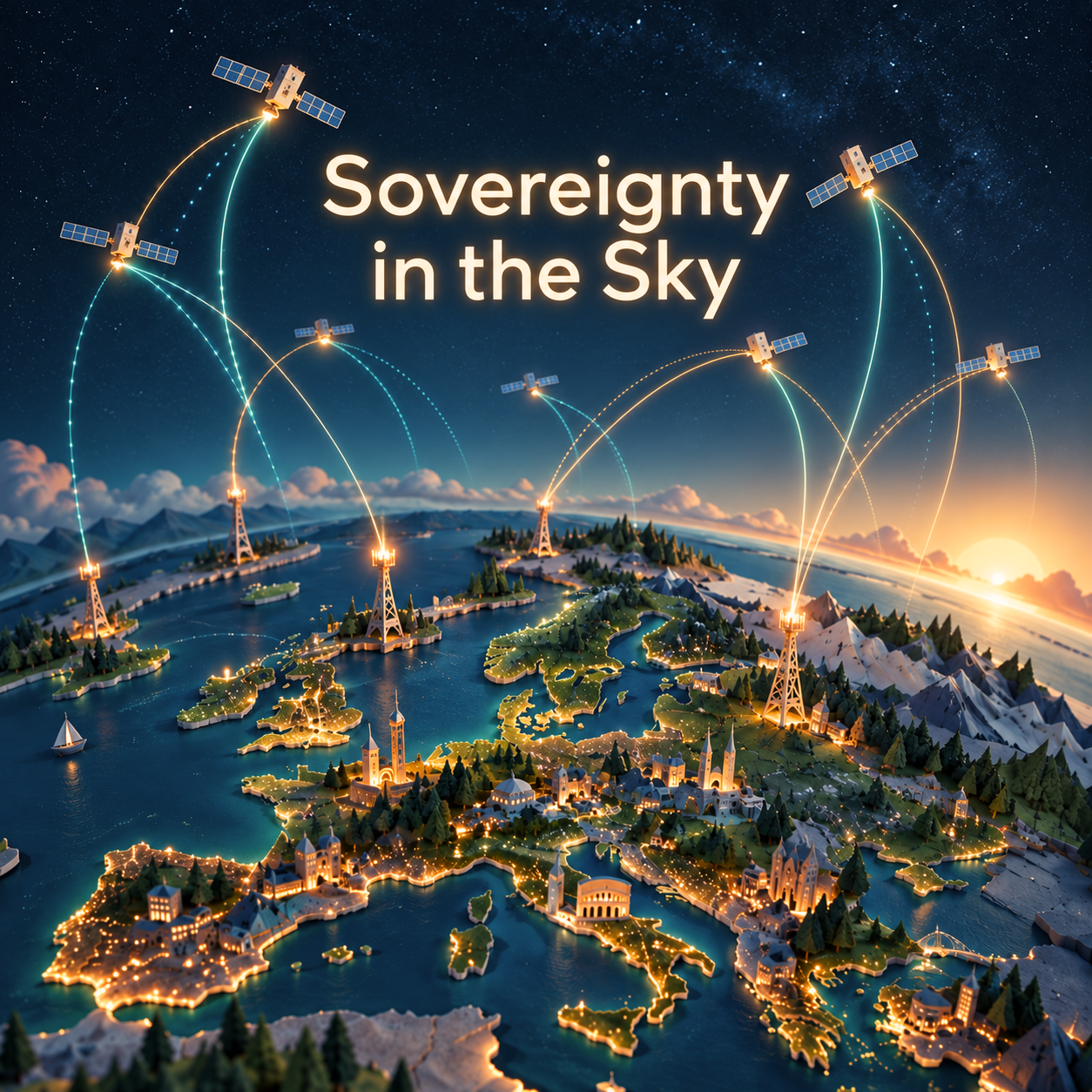
Move over Sovereign AI. The next major geopolitical technology battleground is in low Earth orbit.
Bloomberg reported Monday that Deutsche Telekom, Orange, Vodafone and Telefónica are in early talks to form a consortium and bid jointly for EU 2 GHz satellite spectrum, enabling direct-to-device service on ordinary smartphones.
This is not just a coverage play. Europe is drawing a line around who controls the next layer of mobile infrastructure.
The proposal would divide the band into three parts:
1/3 reserved for a new EU-controlled commercial entrant
1/3 dedicated to secure government, security and defense communications, operated by an EU provider and integrated with IRIS² (EU's secure satellite network)
1/3 open to both EU and non-EU bidders, including SpaceX's Starlink
In effect, Europe would reserve two-thirds of this strategic spectrum for European-controlled operators, while leaving one-third open to global competition.
Pooling resources could accelerate deployment and give Europe the scale to compete. But if four of its largest operators bid together, competition safeguards and open wholesale access matter too.
Now comes the harder part: spectrum sovereignty is not infrastructure sovereignty.
Europe can control the licenses, customer relationships, data and ground operations. But it does not yet have a European-controlled D2D constellation at Starlink's scale. Its flagship IRIS² constellation will not begin launching until 2029.
In the meantime, Deutsche Telekom plans to offer D2D through Starlink. Vodafone has formed a European D2D venture with AST SpaceMobile, Orange has signed on for demonstrations, and Telefónica is exploring the platform.
That is not necessarily a contradiction. It may be the bridge between today's market reality and tomorrow's strategic autonomy.
True sovereignty does not require owning every component. It requires deciding which layers must remain under your control, which partnerships are acceptable, and how quickly dependencies can be changed when geopolitics shifts.
Telecom networks no longer end at the cell tower. Satellites are becoming an extension of the mobile network, filling coverage gaps and providing resilience when terrestrial infrastructure fails.
Space is becoming a core layer of national infrastructure.
Europe is using spectrum policy to stake a claim to sovereignty in direct-to-device satellite connectivity. Turning that claim into a lasting strategic advantage will depend on execution.